
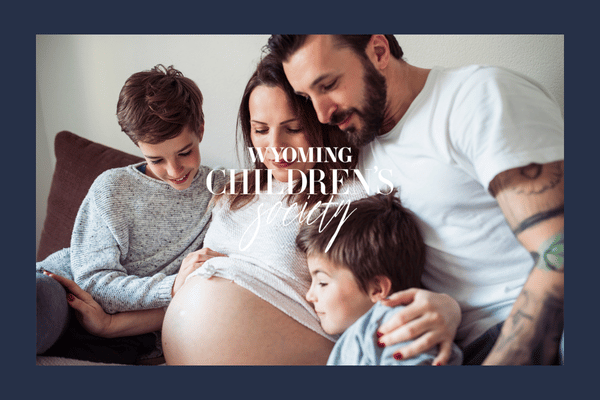
If you are making an adoption plan while raising other children, you may be worried about how to explain what is happening. Your children may see your growing belly and assume a new baby is coming home. They may ask questions you are not sure how to answer. They may also feel sad, confused, angry, or worried after learning about adoption. At Wyoming Children’s Society, we can help you prepare for these conversations and find age appropriate ways to support your children.
Start Talking About Adoption Before the Baby Is Born
If your children know about your pregnancy, it can help to introduce adoption before you go to the hospital. Waiting until after birth may make the change more confusing, especially if they expect the baby to come home.
You do not need to explain everything during one conversation. Instead, give your children information they can understand and allow the conversation to continue. They may ask one question today and another question several weeks later.
For example, you might explain that you are growing their baby brother or sister in your belly. However, another family will become the baby’s parents and raise the baby in their home. You can explain that you have spent a lot of time thinking about this decision.
Keep the explanation simple and truthful. As your children grow, you can add more information based on their age and understanding.
What Words Should I Use?
Positive adoption language can make these conversations easier. Try to use words that explain what is happening without suggesting that the baby is unwanted or being abandoned. For example, instead of saying you are “giving the baby away,” explain that you are making an adoption plan. You can also say that you are choosing a family to raise the baby.
The phrase place your baby for adoption is commonly used when people search for information. However, young children may understand simpler language better. You might tell them, “The baby will live with another family who will be the baby’s parents.”
You can also explain that adoption does not mean someone stopped loving the baby. In fact, love can be an important part of the decision.
What Do I Say When They Ask, “Why Isn’t the Baby Coming Home?”
This may be one of the hardest questions you hear. Your answer should depend on your child’s age. However, you do not need to share adult problems or complicated details they are not ready to understand.
For a younger child, you might explain that grown ups sometimes have to make difficult decisions for their families. You decided another family will raise this baby, while you will continue being their parent and taking care of them.
An older child may be ready for more information. You could explain that every pregnancy happens during different circumstances. Your family may not have the money, time, support, stability, or emotional ability to care for another baby.
Most importantly, avoid making your child responsible for the decision. You do not want them thinking, “Mom chose us instead of the baby.” Explain that this was an adult decision based on many different factors.
Reassure Your Children That They Are Staying With You
Some children may quietly develop a fear they never say out loud. If their baby brother or sister is going to another family, they may wonder whether they could go to another family too.
Reassurance is important, especially for younger children. Tell them directly that adoption is not something you are planning for them. Remind them that you are their parent and they are staying with you. They should not have to guess about their own security.
You may need to provide that reassurance more than once. Children often repeat questions when they are trying to understand something emotional or unfamiliar.
Help Them Understand That Families Can Be Different
Children often understand complicated ideas better when they connect them to something familiar. You can explain that families are created in many different ways.
Some children live with both biological parents. Others live with one parent, grandparents, relatives, foster parents, or adoptive parents. Some families have children who joined their family through adoption.
Books can make this conversation easier because they give children characters and stories to relate to. Look for age appropriate books that discuss adoption, birth families, adoptive families, and sibling relationships.
After reading, ask simple questions about what your child noticed. This gives them an opportunity to talk without making the entire conversation about their own family.
Give Your Children Permission to Have Mixed Feelings
Your children may be excited about having a sibling and sad that the baby will not live with them. They may also feel angry, confused, jealous, worried, or curious. Those feelings can exist together.
Avoid telling them they should only feel happy because the baby will have a loving adoptive family. Adoption can include love and opportunity while also involving loss and grief. Instead, acknowledge what they are feeling. You might tell them that you feel different emotions too. This helps children understand that sadness does not mean something is wrong with them.
If their emotions begin affecting sleep, school, behavior, or daily life, additional professional support may be helpful. Wyoming Children’s Society can help you identify resources for your family.
Include Your Children When It Feels Appropriate
Depending on their ages and your circumstances, your children may benefit from being included in parts of your adoption process. Perhaps they can look at pictures of the adoptive family you choose. They might draw a picture or write a letter for their sibling. Older children may want to ask questions about the family or learn where their sibling will live.
Some families create a special keepsake for the baby. Your children could choose a small stuffed animal, book, photograph, or other meaningful item.
Participation should never feel forced. One child may want to be involved in everything, while another may need more emotional distance. Both reactions deserve respect.
Talk About What Happens After the Baby Is Born
Children often need concrete information. They may understand “adoption” better when you explain what will actually happen. Tell them what you know about the hospital and what will happen afterward. If the baby will leave the hospital with the adoptive parents, explain that clearly. If some details are still uncertain, it is okay to say you do not know yet.
You can also explain what the first few days may feel like at home. You may be sad or need extra rest after giving birth. Preparing your children can help them understand why you may need additional support.
Your adoption agency can help you think through these conversations before delivery. At Wyoming Children’s Society, we can also talk about ways your existing children may be included in your hospital or adoption plan when appropriate.
Can My Children Stay Connected With Their Sibling(s)?
Many mothers considering adoption worry about whether their children will know the sibling they placed for adoption. An open or semi open adoption may provide opportunities to maintain that relationship.
The amount of contact can vary. Some families share photographs and updates. Others may have phone calls, video conversations, letters, or in person visits. Think about sibling relationships when discussing openness with prospective adoptive parents. Ask how they feel about maintaining contact between siblings as the children grow.
These conversations are another reason choosing an adoptive family can be important. You are not only thinking about your own future relationship with your child. You may also be thinking about the relationship between brothers and sisters.
Use Photos and Keepsakes to Keep the Connection Real
Children may find it easier to understand their sibling relationship when they have something tangible. Photographs can be especially helpful if your adoption includes ongoing updates.
You might create a photo album that includes pregnancy pictures, hospital photos, the adoptive family, and future pictures of the baby. Children can look through it when they have questions or want to feel connected.
Letters, drawings, birthday cards, and small keepsakes can also become meaningful. These items remind children that their sibling remains part of their family story even though they live in another home.
Ask the adoptive family what forms of communication they are comfortable sharing. Setting expectations early can help everyone understand how openness may work.
Choose Children’s Books That Support the Conversation
Books can give you language when you are struggling to find the right words. Look for stories that describe adoption honestly while showing both birth and adoptive families with respect.
Choose books based on your child’s age and your family’s circumstances. Younger children often benefit from simple picture books about different kinds of families. Older children may appreciate stories that explore adoption, sibling relationships, grief, and identity more deeply.
You can ask your Wyoming Children’s Society adoption professional for age appropriate suggestions and additional resources. Libraries and your child’s school may also have books about adoption and different family structures.
Remember that a book should support your conversation, not replace it. Your children will still need to hear their own family’s story directly from you.
You Do Not Have to Have Every Answer
Children can ask surprisingly difficult questions. You may hear questions about why you chose adoption, whether you regret your decision, or why their sibling cannot simply come home.
It is okay to say, “I don’t know how to answer that yet.” You can think about the question and return to it later.
You also do not need to hide your emotions. If you become sad while talking about your unplanned pregnancy or adoption decision, you can explain that people sometimes cry when something is important to them.
Your children can learn that adoption is something your family can talk about openly. It does not have to become a secret or a subject everyone is afraid to mention.
WCS Can Help Your Family Navigate Adoption in Wyoming
If you are considering adoption in Wyoming while raising other children, your adoption decision affects more than you and your baby. Your children may also need information, reassurance, and support as they understand what adoption means for their family.
At Wyoming Children’s Society, we can help you prepare for those conversations. Unlike simply searching through adoption agencies online, working directly with us gives you someone to ask about the practical and emotional parts of creating an adoption plan.
You do not have to explain everything perfectly. What matters most is creating an environment where your children can ask questions, express their feelings, and know they are loved. As your family moves through adoption, we are here to help you navigate those conversations one step at a time.